
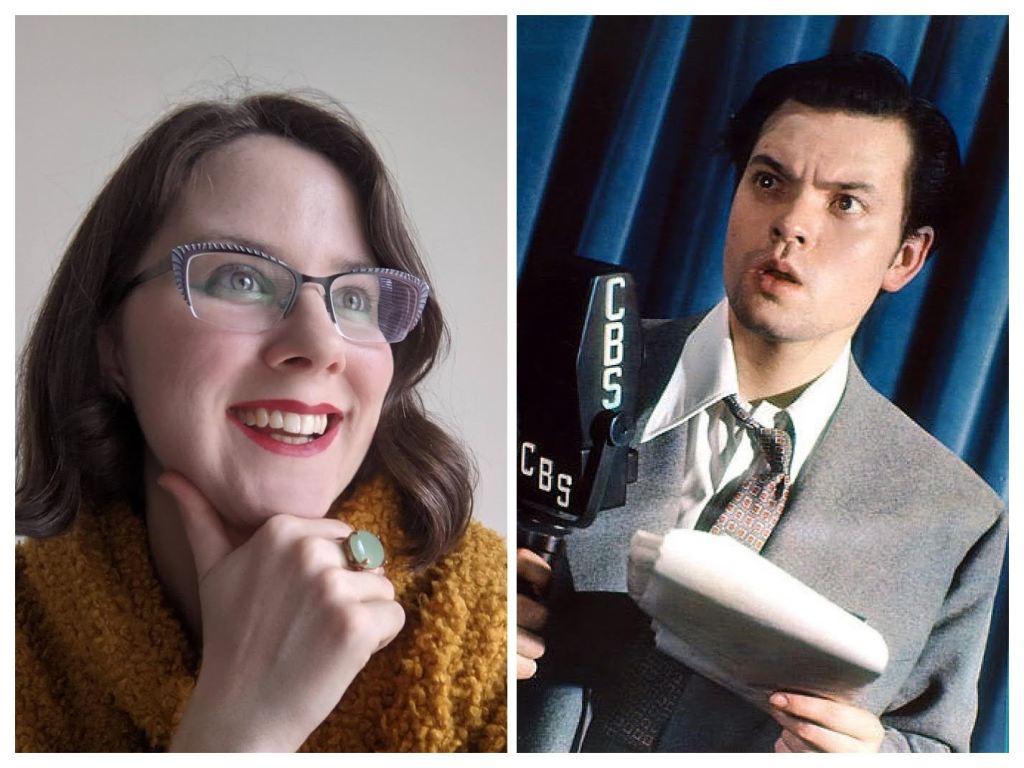
The content creator is the spectral job of our time. Take a minute to look around — everyone around creates content. At times it’s even comical to see how many people refer to themselves as such in the obligatory discussion of what one does. Video games as media are ripped fruit for creators to cover and make content. Though video games are a multi-billion-dollar industry, it’s a difficult environment for anyone looking to make a living covering games.
In 2022, Jenna Stoeber (a/k/a The Jenna), a video producer and content creator that I closely followed and admired, was laid off from Polygon. Stoeber’s videos were imbedded with insight and a degree of endearing quirkiness. Some of my favorite videos made by Stoeber during her time at Polygon were “12 things to love about Wattam” a preview of the 2019 game by Keita Takahashi, and “Cheating in video games used to be fun” a thoughtful look into the journey that was “cheating” in video games for a generation of game players.
Fortunately, Stoeber is still making videos now for her own YouTube channel, where she uploads “essays on video games and horror media.” Her first video essay “Picking Sides in The Wicker Man” efficiently details information and provides context on a topic that is endlessly discussed, the 1973 horror film The Wicker Man. Stoeber eschews from all her videos the ramblings found on YouTube that balloon videos to mammoth proportions. We’ve all seen those videos that just go on for too long. As I watched her channel develop, I felt compelled to reach out and ask her a few questions. Eventually, we talked on July 3, 2023.
During our short chat, Stoeber discussed with Aguas’ Points her departure from Polygon, going out at it alone as an independent content creator, her interest, and many other things. Our conversation also made me ruminate on the question of content creation as a profession, and how content creators differ from artists who work in different forms of media. Was Orson Wells a content creator?
***
Stoeber makes funny and educational video essays. She mixes media studies as a discipline with a degree of accessibility that I’ve yet to encounter on YouTube. The channel Pause and Select might come closest, but ultimately it fails to be as accessible as Stoeber’s videos.
Prior to working at Polygon, Stoeber was making instructional videos as teaching tools for university staff to learn how to utilize tech. Stoeber ended up applying for a job at Polygon where she worked as a Senior Video Producer. For Stoeber, video games are her “first passion.” Her love of survivor horror games, like Resident Evil and Silent Hill, was foundational. This is a reason why she makes a point of covering horror content on her channel.
Her departure from Polygon in the summer of 2022, would eventually become a form of “healing.” She took time for herself to recover from burnout. Now creating content for her independent YouTube channel. Stoeber is confident enough to state that she creates content “…at such a high level and specific degree that people will pay me money.” Being her own boss presents certain challenges and opportunities. She needs to be cognizant of making “the choices that are best for me.” Though she is working more than when she worked at Polygon, she can “take the time if I need to.” This leads to more time researching and working on each video. The results are evident as seen in the clever “I promise, this video is only 9 minutes long” video. The video’s long run time is just an attempt to game the YouTube algorithm that favors long run times as they can house more advertisements.
Contesting with the algorithm is just one of the challenges. The business side of creating content is different for her now that she is not working for a “vertical” (a publication that deals with a specific industry). She can make the content that she wants now. She now only reports to herself, and project deadlines are more flexible. As an independent content creator, Stoeber finds herself wearing two hats at once as both the creator and owner of her labor.
One thing that independent content creators must actively work on is building a network of fans and backers that will sustain the creator’s livelihood. Self-promotion becomes as important as the content itself. The symbiotic relationship between the creator and their backers gives fans the chance to influence the content being made. This applies to Stoeber, who utilizes crowdfunding sites like Patreon to build her growing group of patrons who in turn get behind-the-scenes access and “exclusive voting power” on future content.
So why would someone want to be a content creator? Content is after all meant to be placed somewhere, most likely in a digitally accessible publication, for the public to consume. It’s a job that constantly makes the ownership of its creator’s labor questionable. Who owns the content published on YouTube, Instagram, or the roadshow implosion that is Twitter? Considering that content usually monetarily benefits the specific website that publishes it, it can be difficult for content creators to start getting remunerated. According to Stoeber, the owner of the content is “… actually very clear cut! The person who created the content owns it, regardless of who uploads it. I own all the content I upload. Arguably the purpose of platforms like YT (YouTube) is to host content without claiming credit/ownership of any of it, which allows them to remain inculpable.”
There is more that could be said about the content creator. It is also a profession whose very specificity delineates a lack of confidence in its generalist sort of labor. Content creators write, record audio and video, edit, and act, among other things, as a means of creating content for sites either as freelancers or sometimes as salaried employees. Imagine great polymaths like Orson Wells, Charlie Chaplin, Susan Sontag, Prince, Agnès Varda, Jackie Chan, or Pierre Boulez calling themselves content creators. Stoeber wouldn’t call Wells a content creator. She told me that since the term is “relatively modern and has implications that weren’t applicable for his era. But I don’t think it would be inaccurate since he created content and worked in many mediums.” I agree that technically artists like Wells did create content. Isn’t a movie also content? However, the aforementioned creators are all unequivocally artists who express themselves at high levels in several different forms. Isn’t this also content creation? Conversely, is a writer a content creator if they only produce books? Am I a content creator? So many questions.
Maybe a key distinction with content creators is that they mainly react to culture. The best content creators offer insight into already existing media, Stoeber being among them. Nevertheless, they are consumers whose job is to consume. Thus – paraphrasing French sociologist Pierre Bourdieu here – their cultural production (or reproduction) is rooted in the strengthening of existing educational or information perspectives on existing media. Either the content creator is looking to bridge the gap between the more “respectable” perspectives through media analysis as propagated in academia or tasked with force-feeding consumers their hourly deluge of corporate-approved yet means-tested information, like IGN or most of what is available on the internet. Stoeber’s work is more of the former and none of the latter, as she caters to eclectic consumers who like their media a little weird.
Currently, Stoeber is fast at work on more videos for her channel. She is also working on a script for a future video on the state of the Internet. Godspeed!
 Aguas' Points